
- Kappo Sato Toronto: Ultimate Menu, Prices, Omakase Experience & Guide - September 24, 2026
- Restaurant 20 Victoria: A Complete Guide to Menu, Prices, Ambiance & Reviews - September 24, 2026
- Enigma Yorkville Toronto: Michelin Dining, Menu & Experience - September 23, 2026
Some fine-dining restaurants impress with huge dining rooms, dramatic entrances, and extravagant décor. Restaurant 20 Victoria takes almost the opposite approach.
This tiny Toronto restaurant makes intimacy part of its identity.
Located at 20 Victoria Street in downtown Toronto, the restaurant has roughly 20 seats and an open kitchen that keeps guests close to the cooking. Michelin describes it as “tiny-but-mighty,” and its current listing places it in the contemporary and seafood categories with a $$$$ price level.
The restaurant entered an important new era in January 2026 when Chef Rafael Covarrubias, commonly known as Rafa, succeeded longtime chef Julie Hyde. Covarrubias previously led the kitchen at Hexagon in Oakville and received Michelin’s 2024 Young Chef Award.
His arrival has given Restaurant 20 Victoria a new culinary personality.
The current food remains polished and technique-driven, but Mexican flavours now appear throughout the experience. Tamales, mole, salsa roja, pipián, chilmole negro, seafood, dry-aged duck, and carefully sourced seasonal produce can all become part of the conversation.
Michelin’s current description specifically highlights a snow crab tamale with salsa roja, scallop with mole verde, and dry-aged roasted duck with chilmole negro.
This combination makes the restaurant difficult to place in one simple category. It is not a Mexican restaurant in the conventional sense, nor is it an old-fashioned European fine-dining room. Instead, it uses modern technique, Canadian ingredients, seafood, and Covarrubias’s Mexican culinary perspective to create something more personal.
For anyone considering a reservation, this guide covers the menu, prices, signature dishes, atmosphere, drinks, customer feedback, location, hours, and practical details worth knowing before dinner.
Location and How to Get There
Restaurant 20 Victoria is located at 20 Victoria Street in downtown Toronto.
The address puts it close to Toronto’s Financial District and within convenient reach of several major downtown areas. It is a useful location for visitors staying centrally, professionals planning an after-work dinner, and tourists exploring Toronto without a car.
The restaurant does not announce itself like a huge luxury establishment.
That understated quality fits its personality. You are arriving at a small destination restaurant rather than entering a hotel-sized dining room.
Public transportation is generally the easiest choice for visitors already downtown. King and Queen subway stations are nearby, and several streetcar and transit connections operate throughout the surrounding area.
If you are driving, leave extra time to find downtown parking. Toronto traffic can become slow during the evening commute, particularly on weekdays.
The restaurant’s central location also makes it easy to build dinner into a larger evening. Guests can explore downtown beforehand rather than travelling directly from another part of the city.
For an important reservation, arriving in the area 15 to 20 minutes early is preferable to rushing through the door after the first course should have started.
Restaurant Ambiance and Interior Design
Restaurant 20 Victoria proves that a memorable dining room does not need to be large.
The restaurant has historically operated with approximately 20 seats, creating an unusually close relationship between the kitchen, service team, and guests. The open kitchen acts as one of the room’s main visual features.
Instead of chefs disappearing behind a wall, much of the action becomes part of dinner.
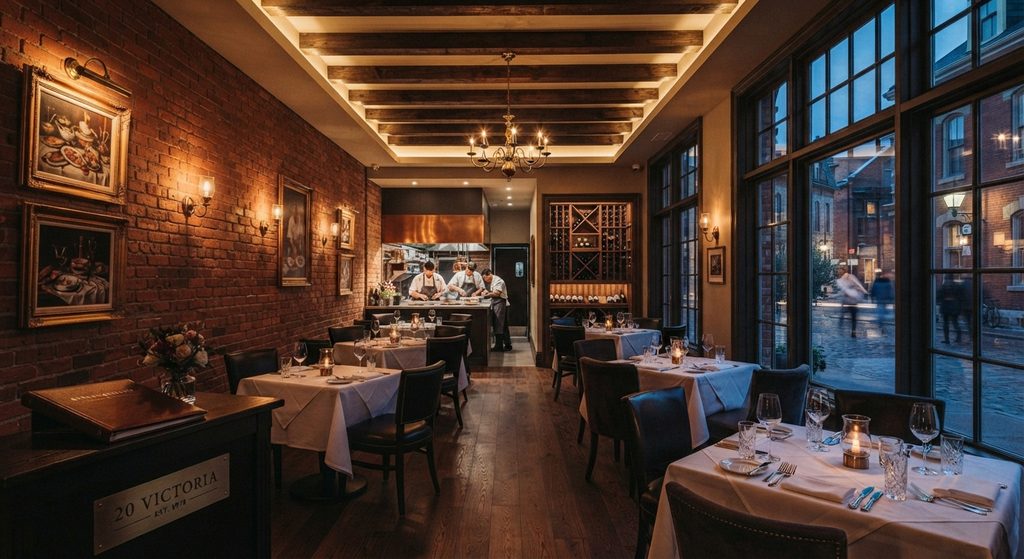
You can see plates being assembled, ingredients being handled, and the team moving through service. For diners interested in cooking, this adds another layer to the evening.
The design itself is restrained.
Rather than filling the room with decorative distractions, the relatively minimal interior allows the plates, kitchen, wine, and conversation to hold your attention.
Lighting becomes softer as the evening progresses. A recent diner specifically described later services as dim, with candles and low overhead lighting contributing to the atmosphere.
That makes the restaurant particularly suitable for dates and anniversaries.
There is also something naturally social about a small room. You are not sitting in a cavernous space surrounded by hundreds of diners. Service can feel more personal because the team is dealing with a limited number of guests.
The atmosphere is refined without feeling excessively stiff. That balance has also been noted in recent professional reviews, which describe the experience as relaxed despite its fine-dining status.
In other words, the restaurant feels serious about food without demanding that guests behave as though they are attending a formal ceremony.
Menu with Prices
This is where readers need to be careful with Restaurant 20 Victoria.
The menu changes.
Older articles show very different dishes and prices because the restaurant is seasonal and has changed chefs. Publishing an old menu as though it were the current permanent selection would therefore be misleading.
Current 2026 diner reports place the main tasting experience around C$200 per person, while other recent restaurant guides show different menu formats and historical prices.
The following table is best used as a practical guide to the current style of dining rather than a promise that every dish will appear on the night you visit.
| Menu Item / Experience | Description | Indicative Price |
|---|---|---|
| Main Tasting Menu | Multi-course seasonal chef-led experience | Around C$200 per person |
| Bluefin Tuna | Contemporary seafood preparation; menu dependent | Seasonal |
| Snow Crab Tamale | Custardy tamale with salsa roja and crab | Part of tasting menu |
| Scallop & Mole Verde | Scallop with Mexican-inspired green mole | Part of tasting menu |
| Dry-Aged Duck | Roasted duck with jus and chilmole negro | Part of tasting menu |
| Seasonal Seafood | Changes according to sourcing and availability | Part of tasting menu |
| Cheese Course | Selection or composed cheese preparation | Menu dependent |
| Dessert | Seasonal plated sweet course | Part of tasting menu |
| Wine Pairing | Wines selected to accompany the menu | Additional charge |
| Wine by Bottle/Glass | Rotating, carefully selected wine list | Varies |
A 2026 community price comparison reported the tasting menu at approximately C$200 and a drink pairing around C$150. Because prices and inclusions can change, these figures should be checked against the restaurant’s live reservation page before booking.
This is important for couples.
Two tasting menus can already represent a significant expense before wine, taxes, and any other charges are considered. A complete evening with a full beverage pairing can therefore cost substantially more than the menu price alone.
The advantage is that you are paying for an extended experience rather than a single entrée.
Signature Dishes You Have to Try
Restaurant 20 Victoria is not built around a permanent list of greatest hits.
Its menu evolves with the season, which means asking for a burger, steak, or signature pasta that remains unchanged year after year misses the point.
However, several dishes help explain Chef Covarrubias’s current direction.
One of the most interesting is the snow crab tamale.
Michelin describes it as a custardy tamale served with salsa roja and snow crab.
The idea immediately tells you something about the kitchen.
A tamale is deeply connected to Mexican cooking, but pairing its comforting texture with delicate Canadian seafood changes its character. The dish connects the chef’s heritage with the premium ingredient-driven approach expected from a Michelin-level Toronto restaurant.
Scallop with mole verde follows a similar philosophy.
Scallops are naturally sweet and delicate. Mole can introduce herbs, spice, earthiness, acidity, and considerable complexity. Putting them together requires restraint because an overly aggressive sauce could completely hide the seafood.
Then comes the dry-aged roasted duck.
Michelin currently describes it as the main event, noting that it is first presented with tableside flair before being served with jus and chilmole negro.
The duck is particularly meaningful because Covarrubias has a history with the ingredient. Before joining 20 Victoria, he won the North American regional final of the S.Pellegrino Young Chef competition in 2019 with a duck preparation.
For first-time diners, these dishes provide a much better understanding of the restaurant than simply describing it as “contemporary Canadian.”
Appetizers and Starters Worth Ordering
At Restaurant 20 Victoria, the idea of an appetizer works differently from a traditional à la carte restaurant.
You may not open a large menu and choose between soup, salad, and calamari.
Instead, early courses are designed to introduce the meal.
Seafood frequently plays an important role.
Past and present menus have included tuna, crab, scallops, oysters, mackerel, mussels, and other seafood depending on the season. The restaurant has long been recognized for seafood-focused cooking, even as its culinary leadership has changed.
Under the current chef, those ingredients can meet Mexican flavours.
A seafood course may contain chile without becoming aggressively spicy. Another might use citrus or herbs to increase freshness. Mole, salsa, or a leche de tigre-style preparation can provide acidity and complexity.
The purpose of these opening plates is not to fill you immediately.
They should create appetite.
That is why texture matters so much. A crisp bite might come before a soft tamale. Raw or lightly cooked seafood can be followed by something warm and richer.
By the time the heavier courses arrive, the diner has already experienced several different flavours without feeling overwhelmed.
Main Courses and Chef’s Specials
The middle and later parts of the menu allow the kitchen to introduce deeper flavours.
This is where proteins such as duck can take centre stage.
Dry aging can concentrate flavour while changing texture. Roasting then creates contrast between the exterior and interior, while a carefully prepared sauce gives the dish additional depth.
The current use of chilmole negro with duck is especially interesting.
Chilmole is associated with Yucatán cooking and is known for its dark, roasted character. Pairing that flavour profile with a refined duck preparation creates a connection between Mexican culinary memory and contemporary tasting-menu technique.
But Restaurant 20 Victoria is not exclusively about meat.
Seafood remains central to its personality.
Recent menu descriptions and diner feedback have referenced dishes involving lobster, snow crab, striped bass, scallops, and other seafood. A July 2026 customer review highlighted lobster, snow crab, striped bass, and duck among the strongest parts of the meal.
Vegetables are not simply decorative either.
In a strong tasting menu, a vegetable course can provide relief between richer dishes or become the focus of a plate itself.
This is one reason the exact menu should remain flexible.
The kitchen can work with what is best rather than forcing the same ingredient onto the plate throughout the year.
Desserts and Sweet Treats
After seafood, sauces, duck, and savoury courses, dessert has an important job.
It needs to finish the meal without making the final 20 minutes feel unnecessarily heavy.
Restaurant 20 Victoria’s desserts have changed considerably over time.
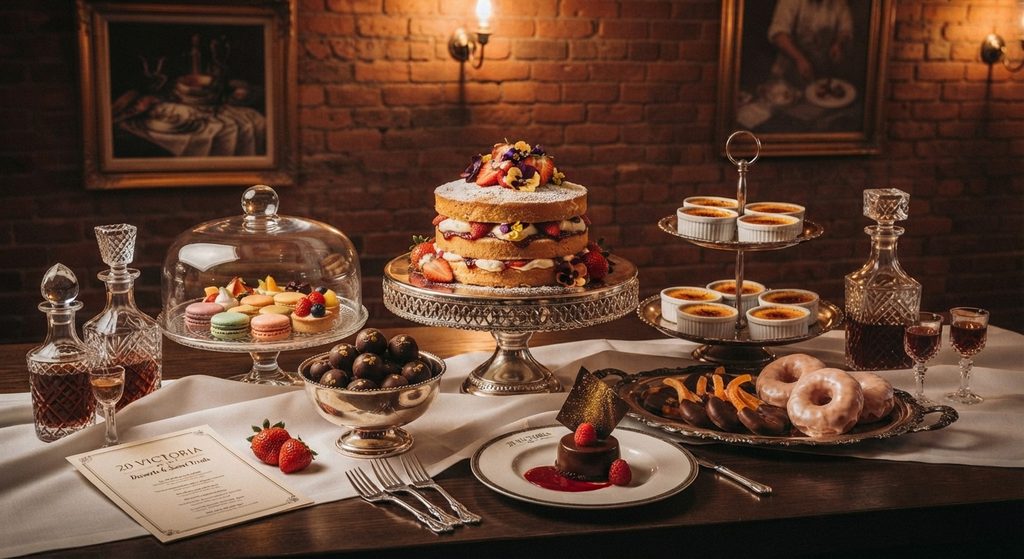
Earlier menus have included combinations such as almond and cherry, sunchoke and apple, pear and cardamom, squash and pistachio, citrus and basil, and other seasonal pairings.
Recent diner feedback from 2026 has also mentioned a tres leches cake course.
That last example fits naturally with the restaurant’s new direction.
Tres leches is familiar and comforting, but in a tasting-menu environment it can be reworked through portion size, texture, presentation, and accompanying flavours.
The best fine-dining desserts often balance sweetness with acidity, bitterness, salt, or fruit.
After several savoury courses, that balance matters more than simply serving the richest possible chocolate dessert.
Expect the final course to change with the menu rather than relying on one permanent signature sweet.
Drinks and Bar Selection
Wine receives serious attention here.
Michelin specifically praises the restaurant’s thoughtful and somewhat unconventional wine selection, as well as the enthusiasm with which the team serves it.
That matters because a tasting menu moves through many different flavour profiles.
One bottle may work beautifully with seafood but become less convincing when the meal reaches duck or dessert. A pairing gives the restaurant an opportunity to change wines as the food develops.
You do not need to be a wine expert to participate.
Tell the service team what you like.
If you normally enjoy crisp white wine, say so. If you dislike sweet wine, mention it. If you have a fixed beverage budget, communicating that is perfectly reasonable.
A full wine pairing is also not mandatory.
Ordering a glass or bottle can be a better choice for diners who drink less.
Cocktails and other drinks may be available depending on the current offering, but wine is especially connected to the restaurant’s identity.
Guests who do not drink alcohol should ask about current non-alcoholic options rather than assuming the experience depends on wine.
Customer Reviews and Overall Reputation
Restaurant 20 Victoria has developed a strong reputation despite its small physical size.
Current structured local-business results show a 4.5/5 rating from hundreds of reviews. Restaurant 20 Victoria
Recent 2026 customer feedback frequently mentions the intimate atmosphere, attentive service, high-quality ingredients, and pacing.
One July 2026 diner described the seven-dish experience as lasting around three hours and praised the freshness of the ingredients and several seafood and duck courses. Other recent reviews describe the restaurant as cozy and particularly suitable for celebrations.
Professional assessments make similar observations about the service.
The Infatuation’s 2026 review noted how personally guests are treated, including staff learning diners’ names, while still describing the overall atmosphere as relaxed for a fine-dining restaurant.
The Michelin Guide emphasizes warm, personable service alongside the current cooking.
Of course, not every diner will value the restaurant equally.
Someone who measures value mainly through portion size may find a C$200 tasting menu difficult to justify. Someone who enjoys seafood, unusual wines, chef-driven menus, and several hours of dining may see the same price very differently.
That distinction is important when reading reviews.
The question is not only “Do people like it?”
It is also “Do people who enjoy this type of restaurant like it?”
5 FAQs
1. What type of food does Restaurant 20 Victoria serve?
Restaurant 20 Victoria serves contemporary tasting-menu cuisine with a strong seafood focus. Under Chef Rafael Covarrubias, Mexican influences have become more prominent, appearing through ingredients and preparations such as tamale, mole verde, salsa roja, and chilmole negro.
2. How much does Restaurant 20 Victoria cost?
Current 2026 diner pricing information places the main tasting menu at approximately C$200 per person, with beverages costing extra. Prices can change, so check the latest reservation information before visiting.
3. Who is the chef at Restaurant 20 Victoria?
Chef Rafael Covarrubias took over the kitchen in January 2026. He previously served as Executive Chef at Hexagon in Oakville and received the Michelin Young Chef Award in 2024.
4. Is Restaurant 20 Victoria good for a date?
Its approximately 20-seat dining room, low lighting, open kitchen, personal service, and long tasting experience make it particularly well suited to dates, anniversaries, and small celebrations. Michelin itself currently identifies the restaurant as a romantic dining option.
5. Do I need a reservation for Restaurant 20 Victoria?
Planning ahead is strongly recommended. The restaurant has very limited seating, and Michelin notes that reservations can be scarce.
Hours, Reservations, and Best Time to Visit
Restaurant 20 Victoria currently lists dinner service from 5:30 p.m. to 10:00 p.m. Wednesday through Saturday. It is closed Sunday, Monday, and Tuesday.
Because operating hours can change, always confirm them when making your reservation.
The restaurant’s small capacity makes advance booking especially important.
This is not the kind of place where a large number of empty tables can suddenly become available. With roughly 20 seats, a busy service can fill the entire restaurant with a relatively small number of reservations.
Earlier evening reservations have some advantages.
The room may have more natural or ambient light, which is helpful if you enjoy photographing your food. A recent diner specifically noted that later services become quite dim.
A later reservation, however, may feel more intimate and atmospheric.
Wednesday and Thursday can be appealing for diners who prefer a quieter midweek evening, while Friday and Saturday naturally work better for celebrations and weekend plans.
Allow roughly a few hours rather than expecting a quick meal. One recent guest reported approximately three hours for a seven-dish experience.
Most importantly, disclose allergies before arriving.
A tasting menu involves interconnected preparations, sauces, stocks, seafood, and garnishes. Advance notice gives the kitchen a much better opportunity to determine whether a dietary requirement can be accommodated.
Final Verdict: Is Restaurant 20 Victoria Worth It?
Restaurant 20 Victoria offers something increasingly difficult to find in a major city: ambitious fine dining on a genuinely intimate scale.
There is no enormous room to hide in.
The kitchen is close. The service team is close. Other diners are close. Every plate receives attention because the restaurant serves only a small number of people at a time.
That intimacy has always been part of its appeal, but 2026 has brought a meaningful change.
Chef Rafael Covarrubias has introduced a stronger Mexican voice into a restaurant already known for seafood, seasonal ingredients, and precise contemporary cooking. Michelin now highlights dishes such as snow crab tamale with salsa roja, scallop with mole verde, and dry-aged duck with chilmole negro as examples of the new direction.
The result is not a conventional Mexican menu and not a traditional European tasting menu.
It sits somewhere more personal between those categories.
At around C$200 per person before additional drinks and other charges, dinner is clearly a special-occasion purchase rather than an everyday meal. Diners should understand that before booking.
But the cost also needs to be considered in relation to the format: multiple courses, a small dining room, detailed service, premium ingredients, an open kitchen, and a meal that can unfold over several hours.
Restaurant 20 Victoria will make the most sense for diners who enjoy seafood, seasonal tasting menus, thoughtful wine, and food that occasionally takes them somewhere unexpected.
It is less suited to someone looking for a quick dinner, large individual entrées, or a predictable menu that remains unchanged from one visit to the next.
For the right diner, however, its small size is precisely the attraction. Rather than trying to be Toronto’s biggest or most theatrical luxury restaurant, 20 Victoria concentrates its energy into a tiny room, a changing menu, and a highly personal style of hospitality.
That gives it a character of its own within Toronto’s fine-dining scene.