
- Aburi Hana Toronto Review: Michelin Kaiseki Menu & Prices - September 22, 2026
- Quetzal Restaurant Toronto Review: Wood-Fired Mexican Menu & Prices - April 18, 2026
- Hawksworth Restaurant Vancouver Review: Menu, Prices & Luxury Dining Experience - April 15, 2026
Toronto has developed one of Canada’s most exciting Japanese dining scenes, and Aburi Hana Toronto has become an important name within it. Located in the upscale Yorkville neighbourhood, the restaurant combines Japanese culinary traditions with contemporary presentation, seasonal ingredients, sophisticated drinks, and carefully designed surroundings.
For diners who remember its earlier format, there is an important change to know before visiting. Aburi Hana Toronto has been reimagined as a contemporary Japanese dining salon. Its current concept includes à la carte dining, cocktails, sake, wine, art, and an atmosphere inspired by Japan’s Edo period. The restaurant says its food and experience evolve with Japan’s four seasons.
The Michelin Guide continues to recognize Aburi Hana Toronto with one Michelin Star and classifies it as a Japanese restaurant in Toronto. Michelin also describes Chef Ryusuke Nakagawa’s cooking as a modern interpretation of Kyō-Kaiseki.
This guide covers the menu concept, interior, signature dishes, prices, reservations, dress expectations, reviews, and practical information you should know before planning dinner.
About Aburi Hana Toronto: Michelin-Star Japanese Fine Dining
Aburi Hana is located at 102 Yorkville Avenue in Toronto. Yorkville is well known for luxury shopping, upscale hotels, galleries, and premium restaurants, making the location a natural fit for this style of dining. The restaurant itself is on the lower level, creating a sense of separation from the busy streets above.
Chef Ryusuke Nakagawa is closely associated with the restaurant’s culinary identity. Michelin describes his approach as a modern interpretation of Kyō-Kaiseki, the refined Kyoto tradition in which seasonality, presentation, ingredients, tableware, and the progression of a meal are carefully considered.
However, guests researching the restaurant today should not assume that the experience remains exactly the same as its earlier tasting-menu format.
The current Aburi Hana concept is broader. It brings together Japanese cuisine, cocktails, sake, wine, design, art, and hospitality. The move toward à la carte dining also gives guests more control over how they structure their evening.
This makes it relevant both to experienced Japanese fine-dining enthusiasts and guests who may prefer choosing individual dishes instead of committing to a long tasting menu.
Inside Aburi Hana: Interior, Atmosphere & Dining Experience
The atmosphere is part of the experience rather than simply a background for the food.
Aburi Hana Toronto describes its reimagined space as a contemporary Japanese dining salon inspired by the Edo period. Instead of creating a generic luxury restaurant interior, the concept connects food, art, hospitality, and design.
Guests enter at street level before heading downstairs to the restaurant. An elevator is available after the main entrance for access to the lower-level reception area.
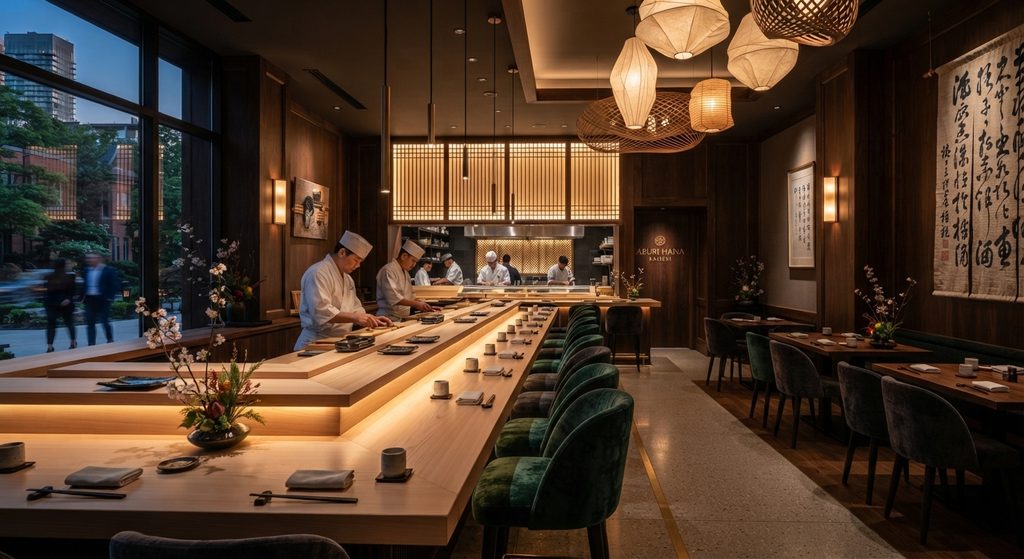
Inside, diners can expect an environment designed for an elegant evening rather than a casual meal. The experience suits date nights, anniversaries, celebrations, business dinners, and visitors who want to include a premium Japanese restaurant in their Toronto itinerary.
One of the most interesting aspects is seasonality. Japanese dining culture often treats the season as part of the complete experience, not simply as a reason to change ingredients. Aburi Hana says that ingredients, flavours, and spaces evolve through the four seasons.
This means repeat visits can offer a different impression depending on the time of year.
For first-time guests, it is worth arriving with enough time to settle in rather than treating the reservation like a quick dinner stop. The combination of food, drinks, service, and surroundings is better suited to an unhurried evening.
Aburi Hana Menu: Modern Kaiseki Cuisine Explained
Understanding the restaurant’s culinary roots helps explain what makes the food different from conventional Japanese dining.
Kaiseki traditionally emphasizes seasonality, balance, presentation, and a carefully considered relationship between different ingredients and cooking methods. Kyō-Kaiseki is particularly associated with Kyoto and places strong emphasis on subtle flavours and seasonal expression.
Michelin specifically identifies Chef Nakagawa’s food as a modern take on Kyō-Kaiseki.
The modern Aburi Hana Toronto menu, however, should not be understood simply as a traditional multi-course kaiseki meal. Its current concept offers à la carte dining, allowing guests to experience Japanese culinary ideas in a more flexible format.
Seasonal seafood, vegetables, carefully prepared proteins, and Japanese techniques can all play important roles. Presentation also matters. Japanese fine dining frequently considers the colour, shape, texture, temperature, and serving vessel of a dish as parts of one composition.
This is why diners should approach the menu differently from a conventional sushi restaurant. Sushi may be familiar territory for many guests, but the broader experience can incorporate several cooking styles and textures.
The best approach is to ask the service team about current seasonal highlights. Because the concept changes throughout the year, dishes recommended during one visit may not be the same several months later.
Aburi Hana Tasting Menu: Courses, Ingredients & Highlights
One common mistake when researching Aburi Hana Toronto is relying on older articles and assuming that its previous tasting-menu structure is still the only way to dine.
That information can now be outdated.
The restaurant’s current official description states that it offers à la carte dining as part of its reimagined concept.
The culinary philosophy nevertheless retains the influence of Japanese seasonal dining and Kyō-Kaiseki. That heritage can be seen in the attention paid to ingredients, preparation, visual composition, and balance.
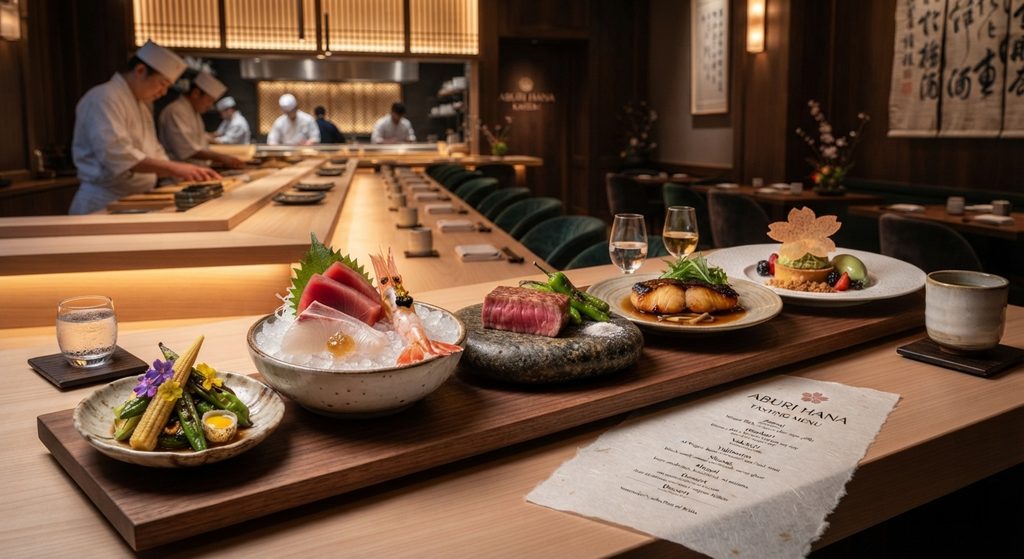
Rather than visiting with a fixed checklist of dishes, diners may get more from the experience by considering what is currently in season.
For example, a well-planned meal could progress from lighter seafood or vegetable preparations toward richer dishes before finishing with something delicate. The restaurant’s team can help create a balanced selection for the table.
This flexibility can also be useful for couples or small groups. Instead of everyone receiving an identical progression, guests can potentially choose several dishes and experience a broader range of flavours.
For visitors specifically seeking the historical tasting-menu experience, confirming the current offering when booking is sensible because restaurant formats and seasonal menus can change.
Signature Dishes at Aburi Hana: What to Expect
At a restaurant built around seasonality, identifying one permanent “must-order” dish can be misleading. What matters more is the style of cooking and the quality of the ingredients available during your visit.
Michelin’s description emphasizes the personal and intricate nature of Chef Nakagawa’s cooking while noting that the dishes remain controlled rather than excessively complicated.
Guests can expect Japanese techniques presented through a contemporary lens. Seasonal seafood is particularly relevant, but vegetables, sauces, broths, garnishes, and carefully controlled cooking methods can be equally important.
When choosing dishes, consider variety.
Starting with delicate flavours before moving toward richer preparations can create a more natural progression. Combining raw or lightly prepared seafood with cooked dishes can also provide contrasting textures.
Sake is an obvious pairing option, but the restaurant’s concept extends beyond sake alone. Wine and cocktails are part of the current experience as well.
A practical strategy for first-time visitors is simply to tell the server that it is your first meal at Aburi Hana and ask which dishes best represent the current season. That can be more useful than ordering based solely on photographs or an old online menu.
Aburi Hana Menu Prices: Complete Cost Breakdown
Aburi Hana Toronto sits at the luxury end of Toronto dining. Michelin categorizes the restaurant as $$$$, its highest general price category.
Because the current concept is seasonal and à la carte, individual items and exact prices can change. For that reason, a static third-party price list can quickly become inaccurate.
A more useful way to plan your budget is to think in terms of the type of experience you want.
| Dining Choice | What to Expect | Budget Consideration |
|---|---|---|
| Light à la carte visit | Selected dishes and a drink | Lower overall spend |
| Full dinner | Multiple dishes across the menu | Premium |
| Dinner with cocktails | Food plus crafted drinks | Higher |
| Dinner with sake or wine | Multiple courses and premium beverages | Luxury-level spend |
| Special celebration | Broad menu selection plus premium drinks | Highest spend |
Taxes, drinks, optional premium selections, and gratuity can significantly increase the final bill.
If price is an important factor in your decision, check the restaurant’s current menu or booking information shortly before your visit rather than relying on an older menu screenshot.
Aburi Hana Reservations: How to Book Your Dining Experience
Planning ahead is recommended for a Michelin-starred restaurant in Yorkville.
The restaurant operates in the evening. Its current published hours are 5:00 p.m. to 1:00 a.m. Sunday through Thursday and 5:00 p.m. to 2:00 a.m. on Friday and Saturday. Regular-menu last orders are currently listed as 10:00 p.m. Sunday through Thursday and 11:00 p.m. on Friday and Saturday. Later bar bites and drinks are available according to the restaurant’s published schedule.
Reservations are particularly useful for Friday and Saturday evenings, special occasions, and visitors who have limited time in Toronto.
When booking, mention important food allergies or dietary restrictions in advance. Japanese cuisine can involve ingredients such as seafood, shellfish, soy, sesame, and fish-based stocks, so advance communication is preferable to making a request after arriving.
For current booking information, use the restaurant’s official reservation channel rather than relying on old third-party articles.
Aburi Hana Dress Code, Hours & Important Dining Tips
A refined smart-casual approach is appropriate for a luxury Yorkville restaurant. Guests do not necessarily need formal evening wear, but polished clothing fits naturally with the setting.
Beyond clothing, good planning can make the evening more enjoyable.
Arrive on time so you can settle in without rushing. If you are unfamiliar with sake, ask the service team for guidance rather than choosing purely by price. If several people are dining together, sharing different dishes may allow the table to experience more of the seasonal menu.
Drivers can consider the Cumberland Street Parkade at 125 Yorkville Avenue, which the restaurant recommends on its FAQ page. The parking facility is a short walk from the restaurant.
Accessibility has also been considered. The restaurant states that an elevator after the main entrance provides access downstairs to reception.
One common mistake is arriving with expectations formed entirely from older reviews. Since Aburi Hana has been reimagined, older descriptions of the format may no longer accurately represent what you will experience today.
Aburi Hana Toronto Reviews: What Guests Say About the Experience
When assessing a luxury restaurant, it helps to separate personal online opinions from professional recognition.
Individual diners may value different things. Some care most about portion size or value, while others prioritize ingredient quality, creativity, atmosphere, or service. This means online ratings should be treated as one part of the research process rather than a guarantee of what your own experience will be.
Professional recognition provides another perspective. As of 2026, Michelin lists Aburi Hana among Toronto’s one-star restaurants, with the star representing high-quality cooking according to Michelin’s classification.
Michelin also includes it in its updated guide to Toronto’s notable Japanese restaurants and highlights Chef Ryusuke Nakagawa’s modern interpretation of Kyō-Kaiseki.
For prospective diners, the more useful question is whether the restaurant’s style matches what they want.
Someone seeking inexpensive sushi or a quick casual dinner will find many more suitable choices in Toronto. Someone interested in seasonal Japanese cooking, detailed presentation, premium hospitality, sake, cocktails, and a sophisticated setting is much closer to the restaurant’s intended audience.
Practical Examples: How to Plan Your Aburi Hana Experience
Suppose you are visiting Toronto for a weekend and want Aburi Hana to be the centrepiece of Saturday evening.
Book ahead rather than waiting until the day of your visit. Plan to arrive in Yorkville early enough to avoid traffic-related stress. Once seated, explain that it is your first visit and ask which dishes best represent the current season.
If you drink alcohol, ask about sake or wine pairings that complement the dishes you choose. Avoid ordering everything at once without guidance; allowing the meal to develop gradually can create a more balanced experience.
For an anniversary or birthday, mention the occasion during the reservation process rather than expecting the restaurant to know when you arrive.
Another situation involves diners familiar with Aburi Hana’s earlier kaiseki format. In that case, approach the new concept with different expectations. The current dining salon is intentionally broader and more flexible, so comparing every detail with the former tasting-menu model may prevent you from appreciating what the restaurant is trying to offer now.
Common Mistakes to Avoid Before Visiting
The biggest mistake is using outdated menu information.
Restaurants frequently change prices and dishes, but this is particularly important here because Aburi Hana has undergone a larger concept change.
Another mistake is assuming “Michelin Star” means a restaurant must be extremely formal. Michelin’s star primarily recognizes cooking; it is not simply an award for luxurious décor.
Guests should also avoid treating the experience like an ordinary sushi outing. Aburi Hana’s culinary identity is broader and rooted in Japanese seasonal cuisine.
Finally, do not leave allergy discussions until the last minute. Informing the restaurant in advance gives the kitchen and service team a better opportunity to explain what can or cannot be accommodated.
Alternatives and Related Dining Situations
Toronto has several high-end Japanese restaurants, but they provide different experiences.
Guests primarily interested in traditional sushi may prefer an omakase-focused counter. Those who want a highly traditional kaiseki structure may look for restaurants specializing specifically in that format.
Aburi Hana occupies a different space. Its current identity combines Japanese seasonal cuisine with a dining-salon atmosphere, beverages, art, and contemporary design.
That distinction is useful when deciding where to spend a special evening. The right restaurant is not simply the one with the most awards; it is the one whose style matches the experience you want.
FAQs
1. Does Aburi Hana have a Michelin Star?
Yes. Michelin currently lists Aburi Hana as a one-Michelin-star Japanese restaurant in Toronto.
2. Is Aburi Hana still a tasting-menu-only restaurant?
No. The restaurant’s current official information describes its reimagined concept as offering à la carte dining alongside cocktails, sake and wine.
3. Where is Aburi Hana located?
It is located at 102 Yorkville Avenue, Unit 4, Lower Level, Toronto, Ontario, M5R 1B9.
4. What kind of food does Aburi Hana Toronto serve?
The restaurant serves contemporary Japanese cuisine influenced by Kyō-Kaiseki and seasonality. Michelin describes Chef Ryusuke Nakagawa’s cooking as a modern interpretation of Kyō-Kaiseki.
5. Is Aburi Hana suitable for a special occasion?
Its premium Japanese cuisine, intimate setting, beverage program, and Yorkville location make it well suited to celebrations, date nights, and special dinners. Guests should reserve ahead when dining on popular evenings.
Conclusion:
Aburi Hana offers a distinctive interpretation of Japanese fine dining in Toronto. Its Michelin recognition, seasonal philosophy, and focus on Japanese craftsmanship have helped establish it as an important part of the city’s luxury restaurant scene.
The most important thing to know before visiting is that the restaurant has evolved. Guests should not rely exclusively on older descriptions of a fixed kaiseki tasting experience. The reimagined Aburi Hana is a contemporary Japanese dining salon offering à la carte cuisine alongside sake, wine, cocktails, art, and seasonally changing design elements.
For first-time visitors, the best approach is simple: reserve in advance, check the latest menu before arriving, communicate dietary requirements early, and ask the staff about seasonal recommendations.
That preparation allows you to focus on what makes the experience distinctive—the ingredients, Japanese craftsmanship, hospitality, and changing expression of the seasons.