
- Shoushin Toronto: Wonderful Omakase Menu, Prices & Sushi Guide - September 25, 2026
- Kappo Sato Toronto: Ultimate Menu, Prices, Omakase Experience & Guide - September 24, 2026
- Restaurant 20 Victoria: A Complete Guide to Menu, Prices, Ambiance & Reviews - September 24, 2026
Tucked into Toronto’s Bedford Park neighbourhood, Shoushin has quietly become one of the most talked-about sushi destinations in the city — and for good reason. This is not a restaurant built for volume or trend-chasing; it’s a tightly run, intensely focused Edomae sushi counter helmed by a single chef whose entire career has led to this room. For anyone researching Toronto’s best omakase experiences, Shoushin Toronto consistently rises to the top of the list, backed by a Michelin star and a reputation built almost entirely on word of mouth. This guide walks through everything worth knowing — the chef, the menu, the pricing, the etiquette, and whether it lives up to the hype.
What Makes Shoushin One of Toronto’s Premier Sushi Restaurants?
Shoushin Toronto distinguishes itself from Toronto’s broader sushi scene through sheer specificity. Rather than offering an extensive menu with rolls, teriyaki, and crowd-pleasing extras, the restaurant commits fully to traditional Edomae-style sushi — a centuries-old Tokyo technique rooted in precise fish preparation, vinegared rice, and minimal but deliberate seasoning.
The name itself signals this philosophy: “Shoushin” roughly translates to “craftsman’s heart” or “craftsman’s house,” a nod to the dedication and discipline expected of a true sushi artisan. Everything about the restaurant, from its physical design to its pacing, reflects that single-minded pursuit of craft over spectacle.
What further sets Shoushin apart is its sourcing. The kitchen works almost exclusively with wild-caught fish, much of it flown in from Tokyo’s Toyosu Fish Market — the same market that supplies many of Japan’s top-tier sushi establishments. This level of sourcing is rare in North America, and it’s a major reason Shoushin is frequently mentioned alongside the continent’s most serious sushi counters, not just Toronto’s best.
Combined with its intimate size, its Michelin recognition, and a chef who personally serves nearly every guest, Shoushin has earned a reputation less like a restaurant and more like a culinary pilgrimage site for serious sushi lovers.
Meet Chef Jackie Lin: The Craft and Philosophy Behind Shoushin
At the centre of Shoushin’s identity is Chef Jackie Lin, the restaurant’s founder and driving force. Born in Guangzhou, China, Lin moved to Canada as a child and grew up in Scarborough. His fascination with Japanese cuisine reportedly began as a teenager after watching documentaries on Japanese food culture — an interest that eventually turned into a full career.
Before opening his own restaurant, Lin spent roughly a decade honing his sushi craft, absorbing the discipline and technical rigour that Edomae sushi demands. That long apprenticeship-style path is typical of top sushi chefs in Japan, where mastering rice preparation alone can take years before a chef is even allowed to touch fish.
Lin opened Shoushin Toronto in October 2015, and has remained the face of the restaurant ever since, working the counter personally rather than delegating service to a rotating cast of chefs. This hands-on presence is part of what makes dining at Shoushin feel personal — guests aren’t just eating food prepared somewhere out of sight; they’re watching it happen a few feet away, often narrated by Lin himself.
His approach centres on restraint: letting quality ingredients speak for themselves rather than over-manipulating them with heavy sauces or elaborate plating. It’s a philosophy that paid off in a major way in 2022, when Shoushin was awarded a Michelin star — a milestone that brought Lin significant public recognition, including a widely shared moment where Canadian musician Drake personally congratulated him during the Michelin Guide’s Toronto ceremony.
Inside Shoushin Toronto: Sushi Counter, Ambiance & Dining Experience
Walking into Shoushin feels deliberately understated. The restaurant embraces a minimalist Japanese aesthetic — clean lines, muted tones, and an absence of unnecessary decoration — designed to keep attention on the food and the craftsmanship behind it rather than on flashy design elements.
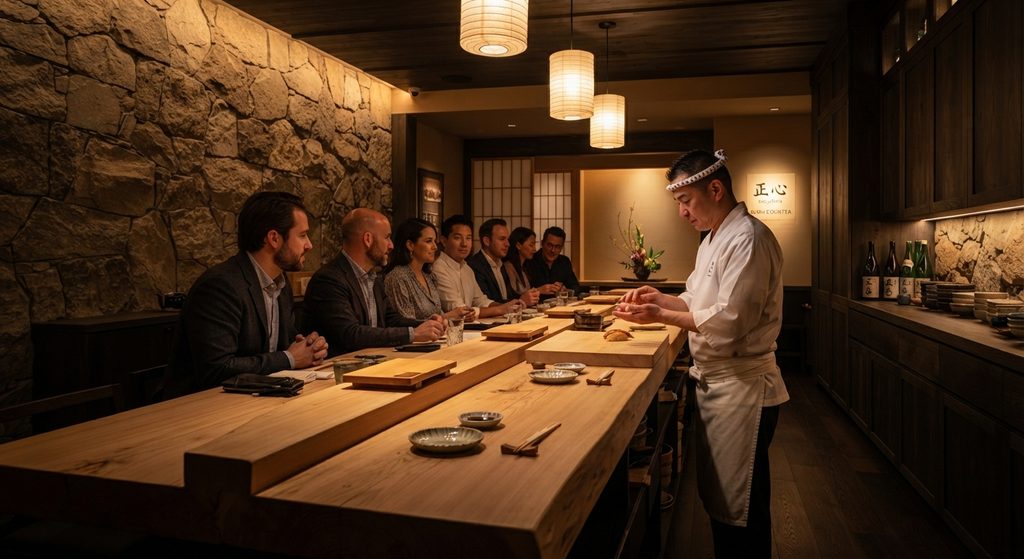
The centrepiece of the room is a striking hinoki wood counter, reportedly around 200 years old and cut from a single piece of timber. Hinoki wood is traditionally reserved for temples and shrines in Japan due to its pale colour, soft texture, and subtle fragrance, and its use here is a strong signal of how seriously Shoushin Toronto treats tradition. Diners sit directly across from Chef Lin and his small team, allowing an unobstructed view of each piece of sushi being formed in real time.
Seating is intentionally limited, which is central to the experience. Rather than operating as a high-turnover restaurant, Shoushin Toronto functions more like an intimate performance space, with each seating treated as its own self-contained event. This scarcity of seats is also why reservations are notoriously difficult to secure.
Service reflects the Japanese concept of omotenashi — a deep, anticipatory form of hospitality that goes beyond simply taking orders and delivering food. Staff are attentive without being intrusive, and the overall pacing of a meal is slow and intentional, encouraging guests to be fully present rather than rushing through courses.
Shoushin Menu: Understanding the Traditional Edomae Sushi Experience
Shoushin’s menu structure is built entirely around omakase — a Japanese dining format where the chef selects and serves each course, leaving guests with little to no à la carte control over what appears in front of them. This is a deliberate departure from typical North American sushi restaurants, which often lean heavily on customizable rolls and combination platters.
Edomae sushi, the specific tradition Shoushin follows, originated in the Edo period (modern-day Tokyo) and emphasizes techniques like curing, marinating, and lightly aging fish before serving — rather than simply slicing raw fish and placing it on rice. This approach intensifies and balances flavour in ways that differ noticeably from more casual sushi styles.
Rice preparation is treated with equal seriousness. Reports on Shoushin’s kitchen note the use of a blended rice variety that retains a more natural, less stark-white colour, seasoned with a vinegar balance calibrated to complement — rather than overpower — the fish. This kind of rice-to-fish harmony is considered one of the defining markers of high-level Edomae sushi.
A typical progression moves from lighter, more delicate fish toward richer, more intensely flavoured cuts as the meal continues — a sequencing technique meant to keep the palate engaged without fatigue. Alongside the sushi, guests can expect small supporting courses such as sashimi, seasonal starters, and a warming bowl of soup, all designed to frame and complement the main nigiri progression rather than compete with it.
Shoushin Omakase Experience: What to Expect From Start to Finish
A meal at Shoushin unfolds as a structured, multi-course journey rather than an open-ended dinner. Guests are generally seated directly at the hinoki counter, where the evening begins with a series of smaller, appetizer-style dishes — often featuring seasonal ingredients like delicate shellfish, seasonal vegetables, or lightly prepared seafood — before transitioning into the core nigiri sequence.
From there, the meal typically moves into a procession of individually prepared nigiri, each placed directly in front of the guest and often accompanied by a brief explanation from Chef Lin about the fish’s origin, preparation method, or seasonal significance. This narration is a notable part of the experience, turning dinner into something closer to an educational tasting than a standard restaurant meal.
Expect the pacing to be unhurried. A full omakase seating commonly runs upward of two hours, giving each course room to be appreciated individually rather than rushed through. Sake, wine, or other beverage pairings are frequently offered alongside the meal, with staff able to recommend selections that complement specific courses — something worth taking advantage of, given the thought put into the beverage program.
The meal typically closes with a final, richer course — often involving a warm or cooked element — followed by a light dessert, providing a gentle transition out of the otherwise raw-fish-forward menu.
First-time diners should go in expecting to relinquish control over the menu almost entirely. Substitutions are limited, and the experience is built around trusting the chef’s judgment — which, for many guests, is precisely the appeal.
Shoushin Menu Prices: Omakase Options & Complete Cost Breakdown
Shoushin operates on a prix fixe omakase model, meaning every guest at the table generally must order a full set menu rather than mixing and matching à la carte items. Pricing sits firmly in Toronto’s fine-dining tier, reflecting the quality of ingredients, the intimacy of the setting, and the Michelin-level execution.
| Menu / Item | Description | Approximate Price (CAD, per person) |
|---|---|---|
| Introductory Omakase | Shorter tasting menu with starters and a nigiri progression, geared toward first-time guests | $400 – $430 |
| Premium/Extended Omakase | Longer, more personalized menu with rarer seasonal ingredients and additional courses | $550 – $600 |
| Sake Pairing | Curated pairing featuring rare selections | $80 – $150+ |
| Wine Pairing | Selected wines matched to courses | Varies by selection |
| Additional Premium Nigiri (à la carte add-ons, when available) | Extra pieces such as uni or toro | $15 – $40+ per piece |
Because Shoushin’s menus and pricing shift with seasonal availability and market cost (particularly for premium items like uni, toro, and specialty shellfish), it’s essential to confirm current pricing directly through the restaurant’s official booking platform before reserving. Gratuity, beverage pairings, and any supplemental premium items will generally push the final bill higher than the base omakase price.
Given the cost, many diners treat a Shoushin reservation as a special-occasion event — an anniversary, milestone birthday, or a deliberate splurge — rather than a casual dinner choice.
Signature Sushi, Seasonal Fish & Premium Japanese Ingredients
Because Shoushin’s menu rotates with the seasons and market availability, no two visits are guaranteed to be identical — a deliberate feature rather than a limitation. That said, certain ingredients and preparations have become closely associated with the restaurant’s identity.
Seasonal specialties that have appeared on the menu include delicate items like firefly squid, prized for its brief seasonal window and distinctive texture, and murasaki uni, a premium variety of sea urchin known for its rich, briny sweetness. Nigiri offerings often span a spectrum from milder, silvery fish like kohada (gizzard shad) — a classic Edomae staple — through to richer, warmer preparations such as anago (saltwater eel), typically served near the end of the nigiri sequence.
Sashimi courses have featured seasonal catches such as Spanish mackerel and squid, chosen specifically because their flavour profiles pair well with sake, making them a highlight of any beverage-paired seating. Richer, more indulgent additions — such as monkfish liver, sometimes described as the “foie gras of the sea” — occasionally appear as well, showcasing the kitchen’s willingness to push beyond the most familiar sushi staples.
Because the bulk of the fish is sourced through Tokyo’s Toyosu Market, guests are essentially tasting the same calibre of product served at top-tier sushi counters in Japan — a rarity in the North American dining landscape and a major differentiator for Shoushin within Toronto’s competitive Japanese food scene.
Shoushin Reservations: How to Book Your Omakase Experience
Given its limited seating and high demand, securing a table at Shoushin requires some planning. Reservations are typically managed through an online booking platform rather than by phone, and tables — particularly for weekend evenings — tend to book up quickly once released.
Because of the restaurant’s popularity following its Michelin recognition, prospective guests should expect to book well in advance, and should be prepared to act quickly when new reservation windows open. Some booking systems also require a credit card hold or pre-authorization to secure the reservation, which will convert into the full charge at the time of dining, replacing a traditional deposit. It’s worth reviewing the specific cancellation policy at the time of booking, since Shoushin’s structure is stricter than a typical casual restaurant given the cost and preparation involved in an omakase seating.
Given the restaurant’s limited operating days and evening-only service, flexibility with dates and being ready to book as soon as new availability appears will significantly improve your chances of landing a seat at the counter.
Shoushin Dress Code, Dining Etiquette & Tips for First-Time Guests
While Shoushin doesn’t enforce a formal dress code in the strict black-tie sense, the atmosphere calls for smart-casual to upscale attire — think what you’d wear to a nice dinner date or a special celebration, rather than gym wear or beachwear.
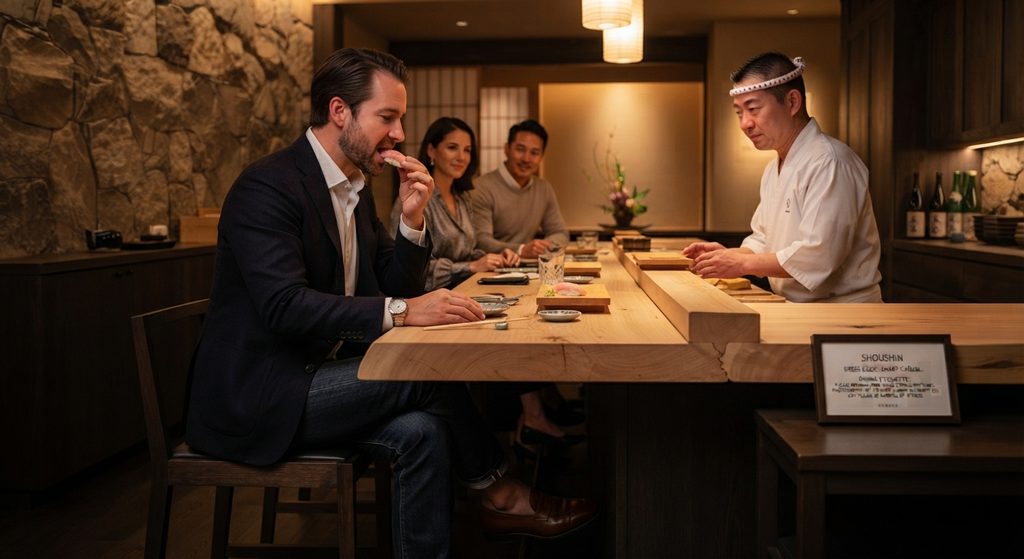
A few etiquette points can help first-time guests get the most out of the experience:
- Arrive on time. Because the meal follows a carefully timed sequence prepared for the whole counter, late arrivals can disrupt the pacing for other guests.
- Come with an open palate. Substitutions are limited, and the experience is built around trusting the chef’s selections — guests with significant dietary restrictions should communicate them clearly when booking.
- Minimize strong scents. Heavy perfume or cologne can interfere with the delicate aromas of the fish, both for the guest and neighbouring diners at the shared counter.
- Engage with the chef. Part of the value of an omakase counter experience is the direct interaction — asking questions about a dish’s origin or preparation is welcomed, not intrusive.
- Pace yourself with pairings. If opting for a sake or wine pairing, sip mindfully rather than rushing, since each pairing is selected to match a specific course.
- Expect a phone-light environment. While not strictly banned, extensive phone use or flash photography can feel out of step with the room’s quiet, focused tone.
Following these norms isn’t about rigid formality — it’s about respecting a dining format built on craftsmanship, patience, and attention.
Shoushin Michelin Recognition, Awards & Toronto Reputation
Shoushin’s most significant public milestone came in 2022, when it received a Michelin star as part of the inaugural Michelin Guide Toronto awards — a major moment for the city’s dining scene as a whole, and a career-defining achievement for Chef Jackie Lin personally.
Michelin’s own assessment of the restaurant highlights its precise nigiri progression, thoughtfully balanced rice, and the personal, hands-on presence of Chef Lin at the counter. The recognition placed Shoushin among a small handful of Toronto restaurants recognized at that level, and cemented its status as one of the definitive Edomae sushi destinations outside Japan.
Beyond the formal accolade, Shoushin has built a broader reputation through sustained praise from food critics, local publications, and prominent public figures — including a widely publicized moment where musician Drake called in to personally congratulate Chef Lin following the Michelin announcement, a moment that brought even more mainstream attention to the restaurant.
This combination of critical, institutional, and cultural recognition has helped keep Shoushin firmly positioned as one of the most sought-after reservations in Toronto’s fine-dining landscape.
Shoushin Restaurant Reviews: What Diners Say About the Experience
Across food blogs, review platforms, and dining guides, a consistent picture emerges of Shoushin: an experience defined by precision, intimacy, and a steep — but, according to most accounts, justified — price tag.
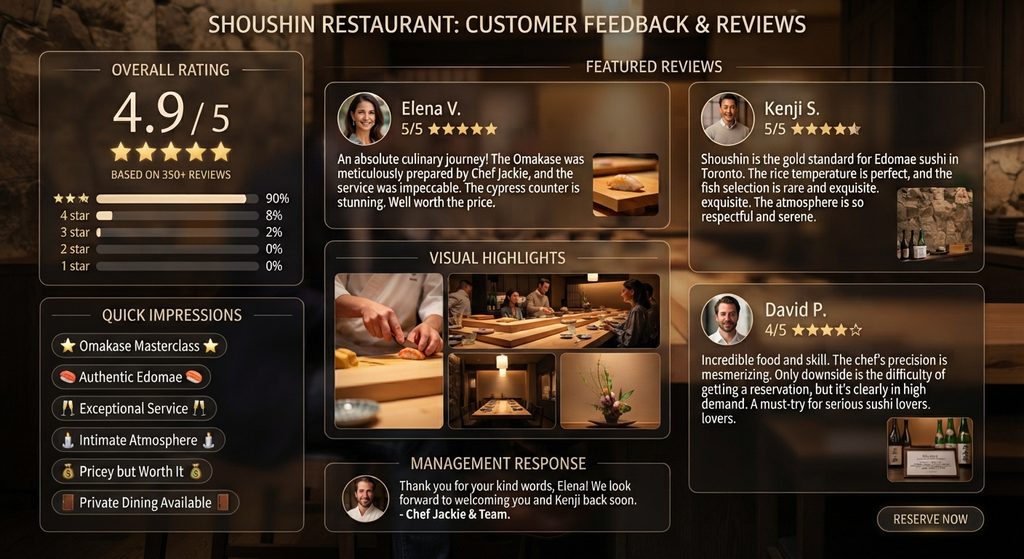
Diners frequently highlight the sensory impact of the hinoki counter itself, describing the setting as central to the meal rather than a mere backdrop. The direct interaction with Chef Lin is another recurring theme, with guests noting how his explanations of each dish add depth and context that elevate the meal beyond simple consumption.
Specific dishes mentioned repeatedly in reviews include delicate preparations like octopus with a tart plum-based sauce, seared or lightly grilled tuna, and standout sashimi featuring seasonal catches like sea bream — each cited as examples of the kitchen’s technical control and flavour balance.
Reviewers also tend to note the calming, almost meditative pacing of the meal, describing the miso soup course as a gentle, comforting pause within an otherwise intense tasting progression. While the price point is consistently acknowledged as significant, most reviews frame the cost as commensurate with the ingredient quality, craftsmanship, and overall rarity of the experience within the North American dining landscape.
FAQs & Final Thoughts: Is Shoushin Toronto Worth Visiting?
How much does an omakase dinner at Shoushin cost?
Expect a starting price in the $400+ per person range for the introductory tasting menu, with the extended, more personalized omakase running significantly higher — often in the $550–$600 range before beverages and gratuity.
Do I need a reservation?
Yes — reservations are essential and should be booked well in advance through Shoushin’s official booking platform due to limited seating.
Is there a dress code?
No strict dress code, but smart-casual to upscale attire is recommended given the fine-dining atmosphere.
Can I request substitutions for allergies or dietary restrictions?
Some accommodations may be possible if communicated at the time of booking, but the omakase format generally limits flexibility, so guests with significant restrictions should reach out in advance.
Is Shoushin good for first-time omakase diners?
Yes — the introductory omakase menu is specifically designed to welcome guests who are new to the format, offering a slightly shorter, more approachable progression.
Is Shoushin worth the price?
Based on its Michelin recognition, sourcing standards, and consistent critical praise, most diners and critics consider it one of the definitive splurge-worthy dining experiences in Toronto — particularly for serious sushi enthusiasts.
Conclusion
Shoushin isn’t designed to be a casual sushi outing — it’s a deliberate, immersive experience built around craftsmanship, patience, and top-tier ingredient sourcing rarely matched outside Japan. From Chef Jackie Lin’s decades of dedicated training to the restaurant’s Michelin-starred execution and its striking hinoki counter, every element of Shoushin Toronto reflects an uncompromising commitment to traditional Edomae sushi. For Toronto diners willing to invest in the experience — both financially and in terms of planning ahead for a reservation — Shoushin stands out as one of the city’s most rewarding and memorable fine-dining destinations.