
- DaNico Restaurant Toronto: Menu, Prices &Italian Dining Guide - September 27, 2026
- Kaiseki Yu-zen Hashimoto Toronto: Menu, Prices & Michelin-Star Kaiseki Dining Guide - September 27, 2026
- Shoushin Toronto: Wonderful Omakase Menu, Prices & Sushi Guide - September 25, 2026
Tucked away inside a Japanese cultural building in North York, Kaiseki Yu-zen Hashimoto is unlike almost anything else on Toronto’s dining map. There’s no bustling dining room, no open kitchen theatre, no crowd to people-watch. Instead, there are three tables, a maximum of eight guests a night, and one chef quietly executing a centuries-old culinary tradition with total devotion. This guide explains exactly what that experience involves — the food, the philosophy, the cost, and what it takes to actually get a seat.
What Is Kaiseki Yu-zen Hashimoto? An Introduction to Toronto’s Hidden Gem
Kaiseki Yu-zen Hashimoto is a small, deeply traditional Japanese restaurant specializing in kaiseki — a refined multi-course dining style rooted in centuries of Japanese culinary and cultural history. Unlike sushi bars or izakayas that dominate most cities’ Japanese food scenes, kaiseki isn’t built around a single signature dish. It’s a full sensory sequence, where texture, seasonality, presentation, and pacing all matter as much as taste itself.
What makes this particular restaurant remarkable isn’t just the food — it’s the scale. With only three tables and a nightly cap of eight guests, Kaiseki Yu-zen Hashimoto operates less like a commercial restaurant and more like a private culinary salon. Every dish that leaves the kitchen is prepared, plated, and often personally delivered by the restaurant’s founder, Chef Masaki Hashimoto, who has spent decades perfecting this craft.
Despite its almost invisible footprint — no flashy signage, no street-level presence — the restaurant has earned a devoted following among serious food travelers and a Michelin star that has helped introduce it to a wider audience. For many visitors, it represents one of the only places in Canada to experience kaiseki dining prepared with genuine, hands-on mastery rather than a Westernized approximation of the format.
Where Is Kaiseki Yu-zen Hashimoto Located in North York?
The restaurant is located at 6 Sakura Way, North York, Ontario, M3C 1Z5, connected to the Japanese Canadian Cultural Centre — a detail that adds real texture to the visit rather than being purely coincidental. Reaching the dining room involves walking through a series of quiet, softly lit corridors within the cultural centre, an approach that many first-time guests describe as feeling like a deliberate transition from the outside world into something more contemplative.
This location, somewhat removed from Toronto’s more concentrated downtown restaurant scene, is part of what keeps the experience so private. It isn’t a restaurant you’d casually walk past or stumble into after a show — reaching it requires intention, which suits the deliberate, unhurried nature of the meal that follows.
For guests coming from downtown Toronto, the drive typically takes around 25 to 35 minutes depending on traffic, and given the restaurant’s remote, low-visibility setting within a larger complex, arranging a rideshare or driving with GPS guidance is generally the most reliable way to arrive without confusion.
Meet Chef Masaki Hashimoto: A Master of Traditional Kaiseki Cuisine
Behind every plate at this restaurant is Chef Masaki Hashimoto, a Toronto resident of more than three decades whose culinary foundation was built entirely in Japan. Before settling in Canada, Hashimoto spent roughly fifteen years training in kaiseki cuisine across several Japanese cities, including Iwakuni, Ehime, and Kyoto, as well as at the respected Tokyo restaurant Kocho — training grounds known for producing chefs with extraordinarily precise technical discipline.
In 2007, Hashimoto returned to Japan to compete in a culinary arts competition, where his kaiseki technique earned formal recognition — a milestone that reinforced the authenticity behind what he would go on to build in Toronto. That grounding in genuine Japanese training is a significant part of what separates this restaurant from other Japanese fine-dining spots that may borrow kaiseki’s aesthetic without its underlying rigor.
What’s perhaps most striking is that Hashimoto works largely alone. Night after night, he can be found personally preparing each course, drawing on ingredients selected specifically for their seasonal peak. This isn’t a chef overseeing a brigade from a pass — it’s closer to a solo artisan’s workshop, where the person who trained for fifteen years is also the person plating your dinner.
Inside Kaiseki Yu-zen Hashimoto: Intimate Design, Private Rooms & Ambiance
Step inside, and the restaurant’s design immediately reinforces its philosophy of restraint and privacy. Guests are seated in individual rooms rather than a shared dining floor, meaning there’s no adjacent table, no ambient restaurant noise, and no visual distraction from other diners. This structure alone makes it a favoured choice for sensitive business dinners, marriage proposals, and milestone family celebrations where privacy genuinely matters.
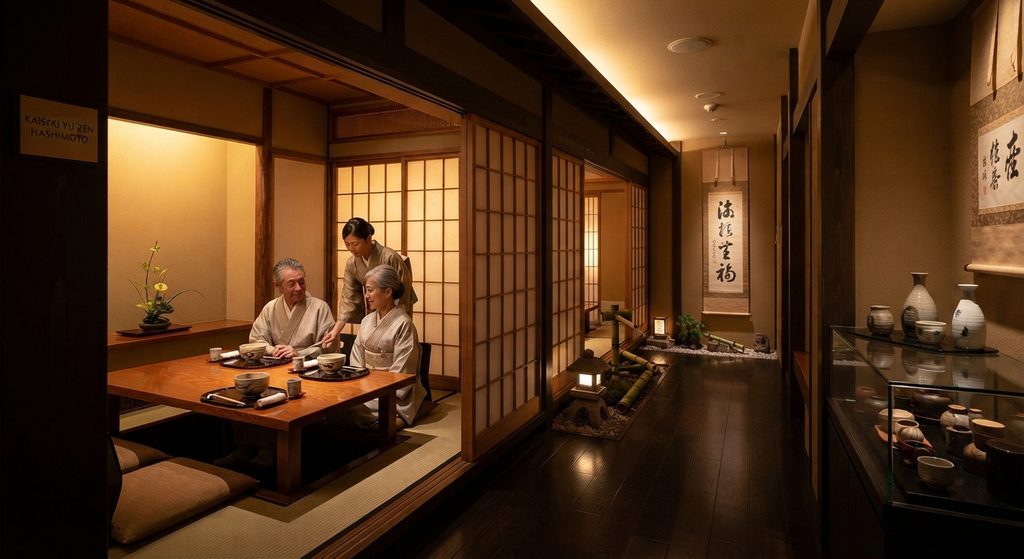
The overall aesthetic draws heavily from traditional Japanese design sensibilities — clean lines, natural materials, and a quiet, unhurried visual language that avoids the ornate excess sometimes associated with luxury dining. The atmosphere has been described by visitors as feeling less like eating in Toronto and more like being transported briefly into a traditional Japanese setting, an impression reinforced by the restaurant’s connection to the surrounding cultural centre.
Because there are only three rooms and a strict eight-guest maximum each evening, the pacing of service never feels rushed. Staff have the bandwidth to focus entirely on the handful of guests present, which shapes an experience built around genuine attentiveness rather than efficient table turnover.
Understanding Kaiseki: The Art and Philosophy Behind the Cuisine
To appreciate a meal here, it helps to understand what kaiseki actually is. Rooted in a culinary tradition passed down for roughly five centuries, kaiseki is built around the idea that a meal should reflect the current season, honour the natural qualities of each ingredient, and unfold as a deliberate, balanced sequence rather than a single showcase dish.
Historically connected to the tranquility of Japanese tea ceremony traditions, kaiseki emphasizes visual harmony as much as flavour — each course is composed with careful attention to colour, plating, and the vessel it’s served in, often chosen specifically to complement that dish’s ingredients and seasonal theme. Nothing on the table is incidental.
This is also a cuisine defined by contrast and pacing: a delicate raw course might be followed by something warm and grilled, then something brothy and comforting, guiding the diner through a full spectrum of textures and temperatures over the course of the evening. Rather than filling the guest quickly, kaiseki is designed to be savoured slowly, course by course, with each dish given room to be appreciated on its own terms before the next arrives.
Kaiseki Yu-zen Hashimoto Menu: Lunch and Dinner Course Breakdown
The restaurant offers two primary menu formats: a six-course lunch and an eight-course dinner, both structured around the same underlying kaiseki principles but differing in length and depth. Both formats traditionally conclude with a tea ceremony — a fitting, contemplative close to a meal built on precision and calm.
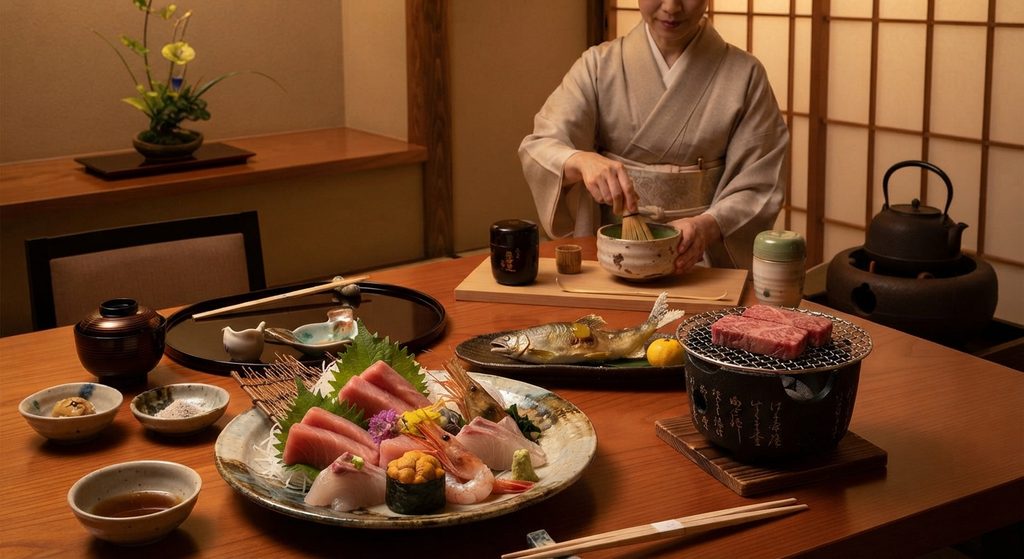
The dinner menu, being the more elaborate of the two, typically moves through a progression that might include delicate sashimi, a warming soup course, grilled or steamed fish, and a rich protein course featuring premium Japanese ingredients, before finishing with a seasonal dessert and the closing tea ritual. The lunch menu follows a similar arc in a more condensed form, offering guests a slightly more accessible entry point into the experience without sacrificing the core structure of a true kaiseki meal.
Because the menu shifts with the seasons — a defining feature of kaiseki rather than a limitation — specific dishes will vary depending on when you visit. Guests returning at different times of year should expect a genuinely different meal, not a repeat of a fixed, unchanging tasting menu.
Signature Dishes: Sashimi, Wagyu, Seasonal Fish & Tea Ceremony
While the exact lineup shifts seasonally, certain elements have become closely associated with the Hashimoto experience. Sashimi courses often feature line-caught fish such as sea bream, prepared with the kind of precision that highlights natural texture rather than masking it. Grilled preparations — including dishes like grilled cutlass fish — showcase a different technical register, balancing char and delicacy in a single bite.
Steamed jackfish and other seasonal seafood preparations frequently appear as well, chosen specifically for their peak-season quality rather than year-round convenience. For guests seeking a richer, more indulgent course, authentic Japanese A5 Wagyu beef — often Miyazaki Wagyu — makes an appearance, offering a dramatic textural and flavour contrast to the lighter seafood-driven courses earlier in the meal.
Dessert courses have also drawn notable praise, with seasonal fruit — Shizuoka musk melon among the standouts — cited by critics as almost shockingly flavourful compared to typical fruit offerings. The meal’s closing tea ceremony isn’t a mere formality either; it’s a deliberate, calming ritual meant to bring the evening’s carefully built momentum to a graceful, unhurried conclusion.
Kaiseki Yu-zen Hashimoto Prices: Full Cost Breakdown
Given its Michelin recognition, extreme exclusivity, and premium ingredient sourcing — including genuine A5 Wagyu and specially selected seasonal seafood — pricing here sits firmly at the top end of Toronto’s dining scene. Because menus and ingredient costs shift seasonally, guests should confirm current pricing directly with the restaurant before booking; the figures below offer general guidance only.
| Menu Type | Description | Approximate Price (CAD, per person) |
|---|---|---|
| Six-Course Lunch Kaiseki | Shorter daytime tasting menu with tea ceremony | $150 – $220 |
| Eight-Course Dinner Kaiseki | Full evening tasting menu with tea ceremony | $300 – $450+ |
| Premium Wagyu Course (when featured) | A5 Miyazaki Wagyu addition | Included in set menu or priced separately depending on season |
| Sake or Beverage Pairing | Curated pairing selections | $60 – $150+ |
Because the restaurant’s capacity is so limited, pricing reflects not just ingredient quality but genuine scarcity — you are, in effect, paying for one of only eight seats available on any given night, each receiving a chef’s full, undivided attention.
What Makes Kaiseki Yu-zen Hashimoto a Michelin-Star Restaurant?
Kaiseki Yu-zen Hashimoto holds a Michelin star, recognized specifically for the quality, discipline, and authenticity of Chef Hashimoto’s traditional eight-course dinner menu. Michelin’s own assessment highlights the restaurant’s focus on substance over spectacle — an intricate, refined style paired with an attention to detail that borders on reverence, rather than an attempt to impress through novelty or excess.
What distinguishes this Michelin recognition from many other star-rated restaurants is the sheer intimacy behind it. Most Michelin-starred kitchens operate with sizable brigades and considerable dining capacity; this one operates with essentially one chef and eight seats. That a solo chef, working largely without the infrastructure typical of high-end kitchens, can consistently deliver Michelin-level execution night after night speaks to an extraordinary depth of technical mastery built over decades.
This recognition has also helped introduce the restaurant to a broader international audience of food travelers specifically seeking out authentic kaiseki experiences outside Japan — a rare offering anywhere in North America, let alone in Toronto.
Reservations, Hours & Tips for Booking Your Table
Given its tiny footprint, reservations at Kaiseki Yu-zen Hashimoto are essential and should be arranged well in advance. The restaurant is generally open in the evenings from around 5:00 pm to 11:00 pm, Thursday through Monday, with Tuesdays and Wednesdays typically closed — though hours can shift, so confirming directly before planning a visit is strongly advised.
Because only three tables and eight total guests are accommodated per evening, availability is limited even under normal circumstances, and demand driven by the restaurant’s Michelin status has made securing a reservation increasingly competitive. Prospective diners should be prepared to book several weeks ahead, particularly for weekend dinners or special occasions.
Given the meal’s slow, deliberate pacing — often extending well over two hours when the tea ceremony is included — guests should plan their evening schedule accordingly and avoid booking anything immediately afterward that requires rushing.
Kaiseki Yu-zen Hashimoto Reviews: What Diners Are Saying
Customer sentiment toward Kaiseki Yu-zen Hashimoto is overwhelmingly positive, with the restaurant holding a strong overall rating across major review platforms. Diners consistently highlight the sense of genuine transportation the experience provides — many describe feeling as though they’ve briefly left Toronto entirely, immersed instead in an authentic slice of traditional Japan.
The privacy afforded by individual dining rooms comes up frequently in reviews, with guests praising the format for special occasions requiring discretion, from proposals to significant business conversations. The quality and freshness of the seasonal ingredients — particularly the seafood and, when featured, the Wagyu — are also repeatedly singled out as standout elements of the meal.
Some reviews note that the experience demands a certain mindset: this isn’t a restaurant for guests wanting quick service or a casual atmosphere, and diners expecting a conventional restaurant experience may find the slow, ritualistic pacing unfamiliar at first. For those who arrive with the right expectations, though, the consensus is overwhelmingly that the meal delivers something genuinely rare.
FAQs
How many guests does the restaurant accommodate per night?
A maximum of eight guests across three private tables.
Do I need to book far in advance?
Yes — given the limited capacity and Michelin recognition, reservations should be made several weeks ahead, especially for weekends.
Is a tea ceremony included with the meal?
Yes, both the lunch and dinner menus conclude with a traditional Japanese tea ceremony.
Does the menu change throughout the year?
Yes, kaiseki is built around seasonality, so dishes shift depending on when you visit.
Is this restaurant suitable for large groups?
No — given its extremely limited seating, it’s best suited to intimate parties of two or a small group within the eight-guest capacity.
Is Kaiseki Yu-zen Hashimoto worth the price?
For diners seeking an authentic, historically rooted Japanese fine-dining experience prepared by a genuinely master-trained chef, most reviews and critical assessments suggest the answer is a resounding yes.
Conclusion
Kaiseki Yu-zen Hashimoto isn’t trying to be the biggest or the flashiest name in Toronto dining — it’s aiming for something far more difficult: total, unwavering authenticity, delivered one small table at a time. Between Chef Hashimoto’s decades of training, the restaurant’s Michelin recognition, and an experience built entirely around intimacy and seasonal precision, it stands as one of the most genuinely distinctive fine-dining destinations in the country. For anyone hoping to understand what kaiseki truly is — not a Westernized interpretation of it — this remains one of the very few places in Canada capable of delivering that experience with real integrity.